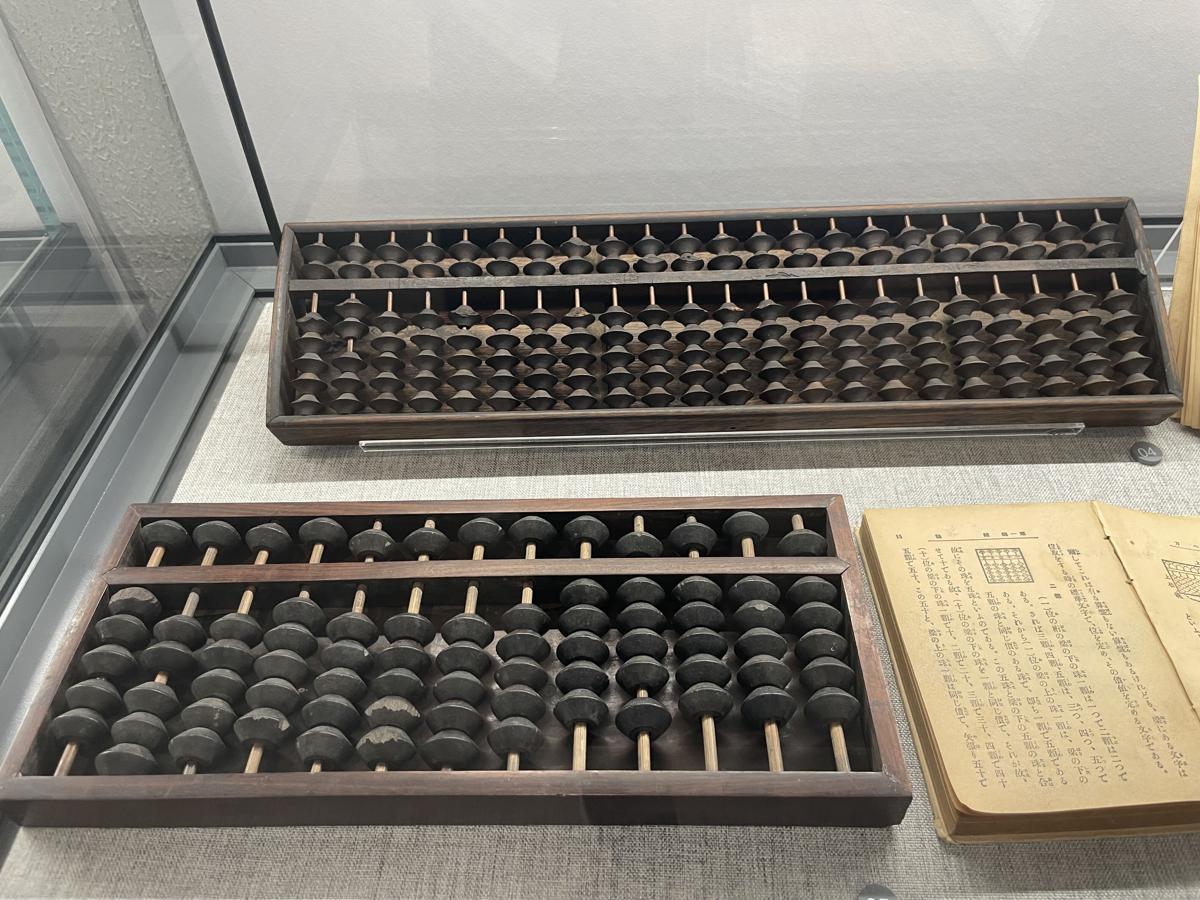
Chinese Abacus
Introduction
The Chinese abacus, also known as the "suanpan" (算盘) in Chinese, is a traditional counting tool that has been used for centuries in China. It is a manual device that facilitates arithmetic calculations and is characterized by its rectangular frame that houses rods or wires. Each rod holds a series of beads that can slide back and forth, and these beads are used to perform mathematical operations such as addition, subtraction, multiplication, and division. Despite the advent of modern calculators and computers, the Chinese abacus remains a significant cultural artifact, symbolizing the ingenuity and mathematical heritage of China.
History
The history of the Chinese abacus dates back to ancient times, with its origins believed to be in the Eastern Han Dynasty (25-220). The abacus is thought to have evolved from counting rods, which were used in China prior to the invention of the abacus. Over the centuries, the abacus has undergone various design modifications and has been used in different regions, spreading its influence beyond China to other parts of Asia and the world.
Structure
The structure of a traditional Chinese abacus consists of a wooden frame, usually rectangular, which contains multiple vertical rods. Each rod holds a series of beads that are divided into two sections by a horizontal beam known as the "heavenly" or "upper" deck and the "earthly" or "lower" deck. The upper deck typically contains two beads per rod, each representing a value of five, while the lower deck contains five beads per rod, each representing a value of one. This configuration allows for rapid and efficient calculations by sliding the beads up and down the rods. The frame is often crafted from durable materials such as wood or bamboo, though more ornate versions have been made from precious materials like jade and silver.
Usage
Basic Operations
The Chinese abacus is renowned for its ability to perform basic arithmetic operations with remarkable speed and accuracy. Users manipulate the beads with their fingers to represent numbers and perform calculations. For addition and subtraction, beads are moved towards or away from the central beam to represent numerical values. Multiplication and division involve more complex sequences of bead movements, but once mastered, these operations can be performed swiftly. The tactile and visual nature of the abacus makes it an effective tool for enhancing numerical literacy and mental arithmetic skills.
Advanced Calculations
Beyond basic arithmetic, the Chinese abacus can also be used for more advanced mathematical calculations, including calculating square roots and performing currency conversions. Skilled users, known as "abacus masters", have refined techniques that allow for rapid mental calculations, reinforcing the abacus as a powerful educational tool. The ability to perform complex computations manually fosters a deeper understanding of mathematical concepts and encourages the development of problem-solving skills.
Cultural Significance
The Chinese abacus holds significant cultural value as a symbol of China's rich mathematical heritage. It represents an important aspect of Chinese education and intellectual history, having been used by scholars, merchants, and officials throughout the centuries. The abacus is also celebrated in Chinese literature, art, and folklore, where it is often depicted as a tool of wisdom and knowledge. Its inclusion in the UNESCO List of the Intangible Cultural Heritage of Humanity in 2013 highlights its global cultural importance and enduring legacy.
Modern Relevance
In the modern era, the Chinese abacus continues to be relevant in educational and cultural contexts. It is used in schools to teach foundational arithmetic skills and to promote cognitive development in children. The manual nature of the abacus encourages active engagement with numbers, making it an effective educational resource. Additionally, the abacus is appreciated for its aesthetic qualities and is often featured in museums and cultural exhibitions. As a symbol of traditional Chinese culture, the abacus remains a cherished artifact that bridges the gap between ancient and contemporary mathematical practices.
Preservation and Promotion
Efforts to preserve and promote the Chinese abacus are ongoing, with museums, educational institutions, and cultural organizations playing key roles. Museums, such as the China Abacus Museum in Nantong, display historical abacuses and offer educational programs to teach visitors about the device's history and usage. Cultural exhibitions and workshops are organized to engage young learners and instill an appreciation for traditional calculation methods. These initiatives ensure that the legacy of the Chinese abacus continues to be celebrated and passed down to future generations.








